


I went to a Miami coffee shop on Monday with one goal, product ideation for the next chapter of Extenteam. I wanted to think about the big picture, about where we’re heading in this rapidly shifting AI landscape. No meetings. No Slack. Just strategic work.
Within an hour, I was managing website issues and trying to keep a fast-moving team member motivated while explaining why QA matters before production deployment.
I was back in the office. Putting out fires. Exactly what I’d tried to escape.
The Time-Hack Hypothesis
That’s when the idea hit me. What if I just left? Not metaphorically. Physically.
If I flew to Europe, I’d have an entire workday where the US team was asleep. No messages. No Slack notifications. No self created emergencies that only I could handle. A forced buffer created by time zones rather than willpower.
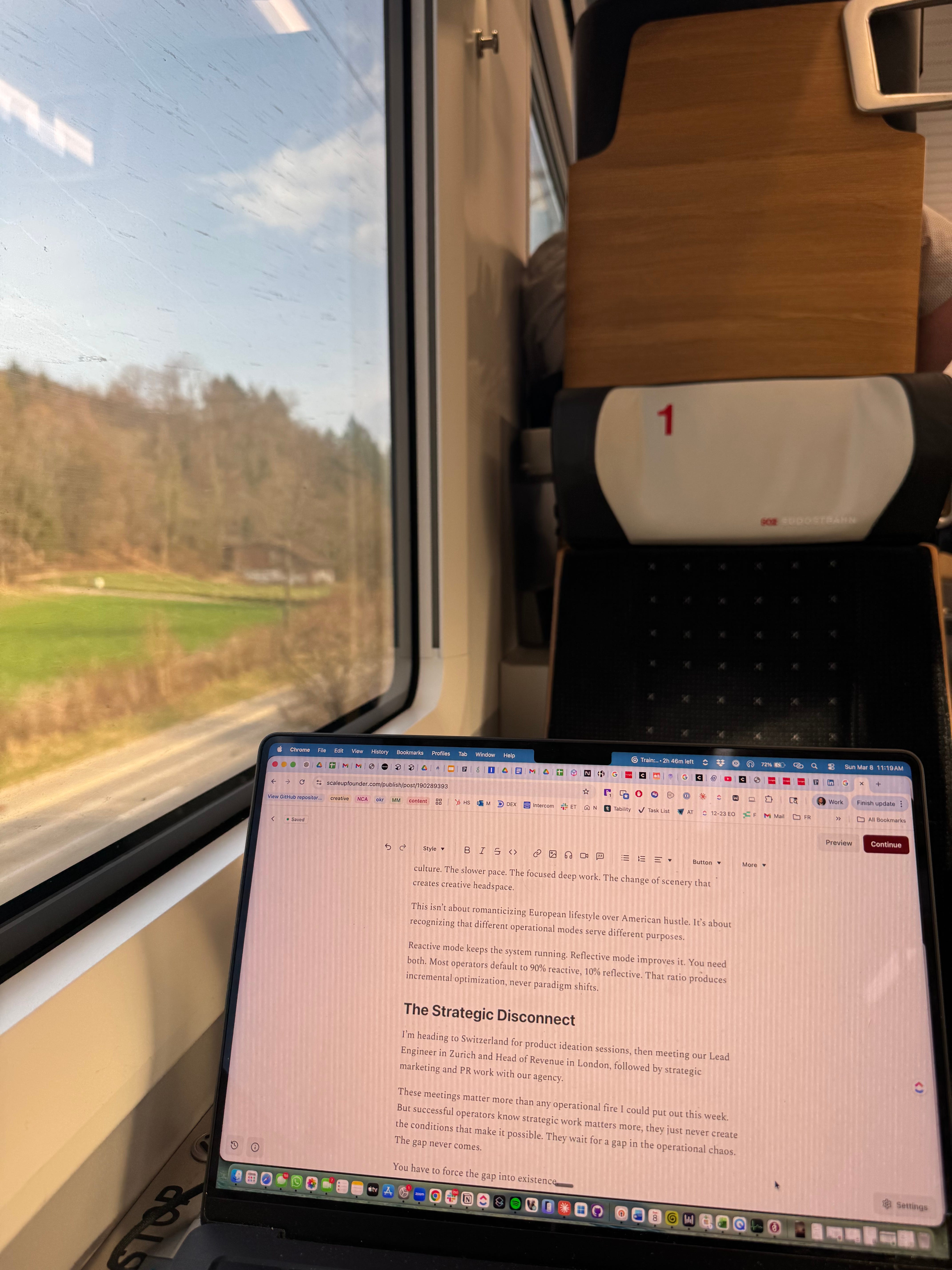
I booked a mileage ticket that night. Seventy-two hours later, I’m writing this from a train between Paris and Andermatt, Switzerland.
The hypothesis worked.
What Actually Happens When You Slow Down
We talk about ambitious growth goals constantly at Extenteam. I push our team to hit or exceed targets. ARR matters. Gross Revenue Retention matters. Financial metrics drive decisions.
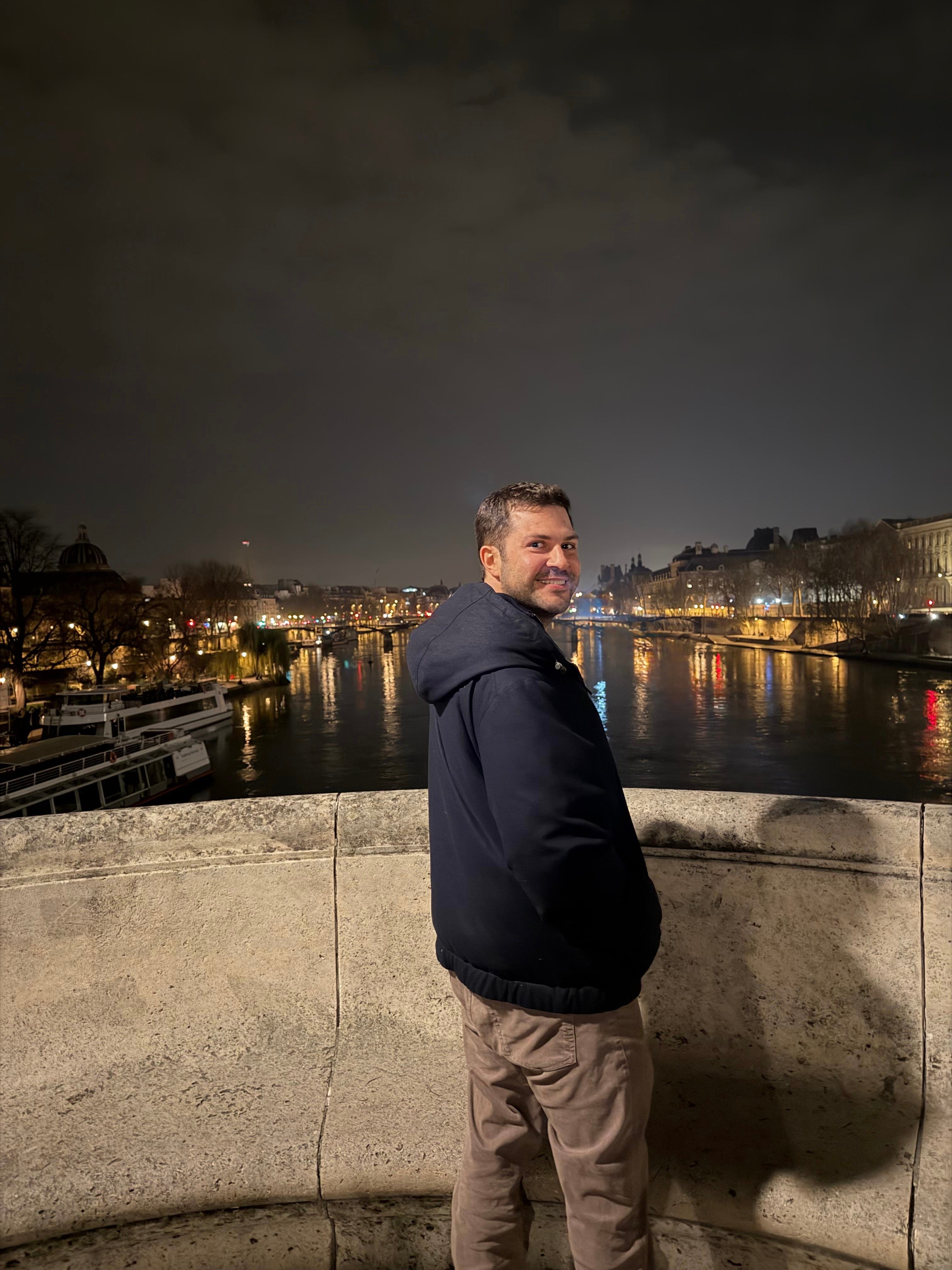
But I spent the last few days in Paris doing something different. Having deep, authentic conversations with people I value. Walking without checking my phone every three minutes. Sitting in cafés without calculating when the next Zoom call starts.
This is where innovation actually happens.
Not in back-to-back meetings. Not while context-switching between five urgent issues. Not while operating in pure reactive mode.
Innovation requires space. It requires presence. It requires the mental bandwidth to see patterns instead of just responding to the next fire.
The Operational Trap Pattern
Here’s what I’ve observed across hundreds of operators managing distributed teams and complex systems, we confuse motion with progress.
You’re in Slack all day. You’re responding to emails within minutes. You’re available for every question, every decision, every minor crisis. You feel productive because you’re constantly doing something.
But you’re not building. You’re maintaining.
The big picture work -the strategic thinking, the architectural decisions, the product innovation -gets perpetually deferred. Not because you don’t value it. Because the urgent always displaces the important when you remain accessible to the urgent.
The operational trap is thinking you can do both simultaneously. You cannot.
Importing 20% of Europe
One of my new best friends, Claude, told me I should bring 20% of Europe back to the office, back to Miami. Not literally- but the mindset. The walking. The café culture. The slower pace. The focused deep work. The change of scenery that creates creative headspace.
This isn’t about romanticizing European lifestyle over American hustle. It’s about recognizing that different operational modes serve different purposes.
Reactive mode keeps the system running. Reflective mode improves it. You need both. Most operators default to 90% reactive, 10% reflective. That ratio produces incremental optimization, never paradigm shifts.
The Strategic Disconnect
I’m heading to Switzerland for product ideation sessions, then meeting our Lead Engineer in Zurich and Head of Revenue in London, followed by strategic marketing and PR work with our agency.
These meetings matter more than any operational fire I could put out this week. But successful operators know strategic work matters more, they just never create the conditions that make it possible. They wait for a gap in the operational chaos. The gap never comes.
You
have to force the gap into existence.
For me, that meant a transatlantic flight. For you, it might mean blocking three days with no meetings and defending that boundary, working from a location where your team cannot interrupt you, or building systems that reduce your operational necessity.
The specific mechanism matters less than the commitment to creating protected space for strategic work.
The Beginning and The End
You stumble into an opportunity. You recognize a pattern others missed. You happen to have the right skills at the right moment.
The end is mostly choices:
Do you stay trapped in operational mode because it feels productive? Or create space for strategic work that compounds over time?
Do you optimize the current system incrementally? Or step back far enough to see the system itself needs replacement?
Do you remain accessible to every urgent issue? Or build infrastructure that reduces issues requiring your direct intervention?
These choices determine whether you’re still putting out the same fires five years from now, or whether you’ve built something that operates without your constant presence.
What This Means for You
Examine how much of your time operates in reactive mode versus reflective mode.
If you’re spending 90% of your time responding to immediate operational needs, you’re not building the future. You’re maintaining the present.
Maintenance work matters. Systems collapse without it. But maintenance alone never produces transformation.
You need protected time for strategic thinking. Not aspirationally. Not when things calm down. Structurally. Built into your operational rhythm as a non-negotiable requirement.
The alternative is confusing activity with progress while big picture work remains perpetually deferred.
The Real Question
Take care of the big picture and yourself. It’s the same goal.
You cannot do strategic work in constant reactive mode. You cannot see patterns while drowning in tactical execution. You cannot build the future while trapped in the present.
What would it take to create 48 hours of completely protected strategic time in the next two weeks?
If that feels impossible, you’ve identified your real constraint: the operational architecture that makes you indispensable to every decision.
Fix that architecture. Then use the space it creates to build what comes next.
Don’t forget to take care of the big picture, but also yourself.
Remember, the beginning is mostly luck. The end is mostly choices.