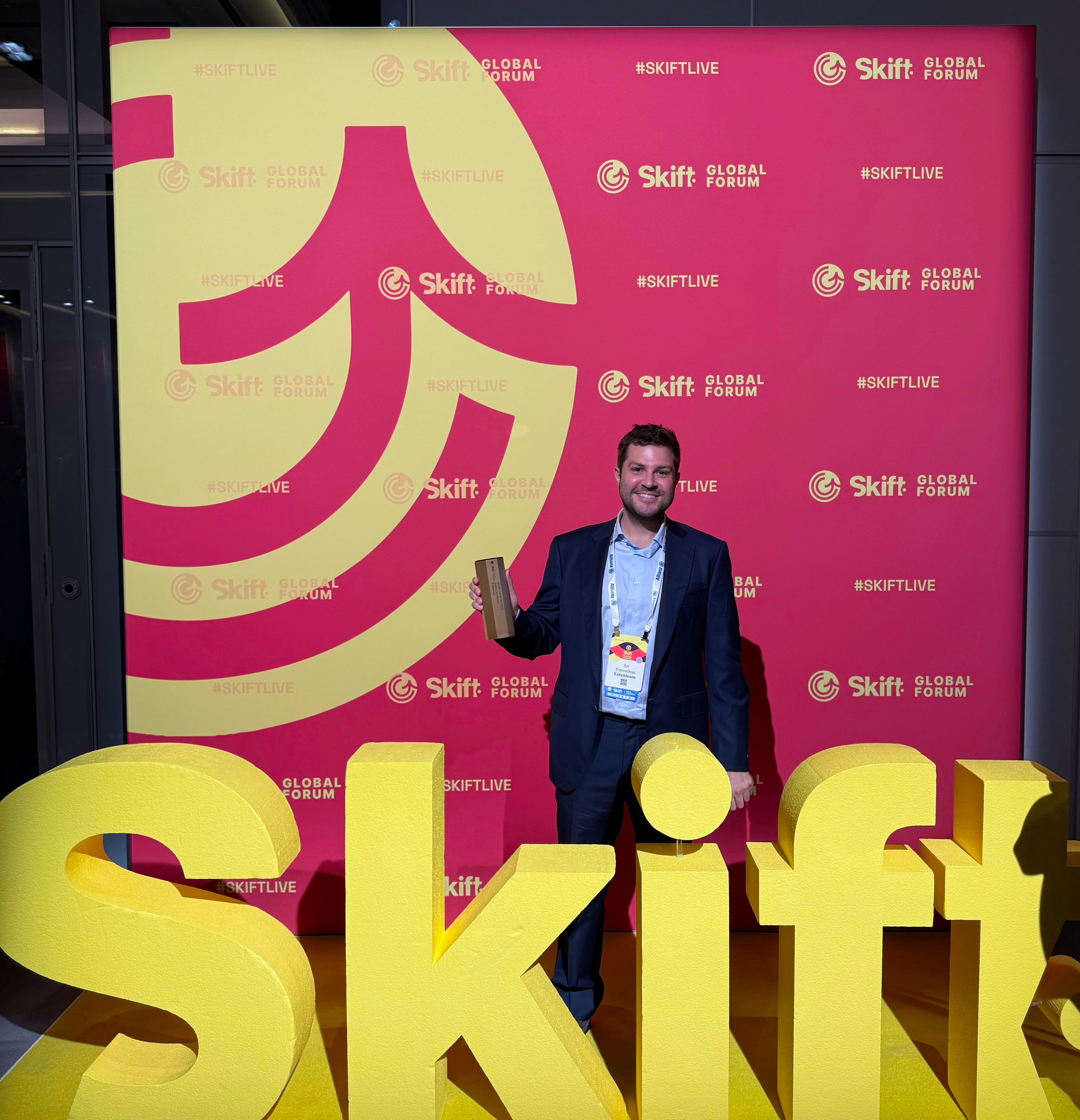

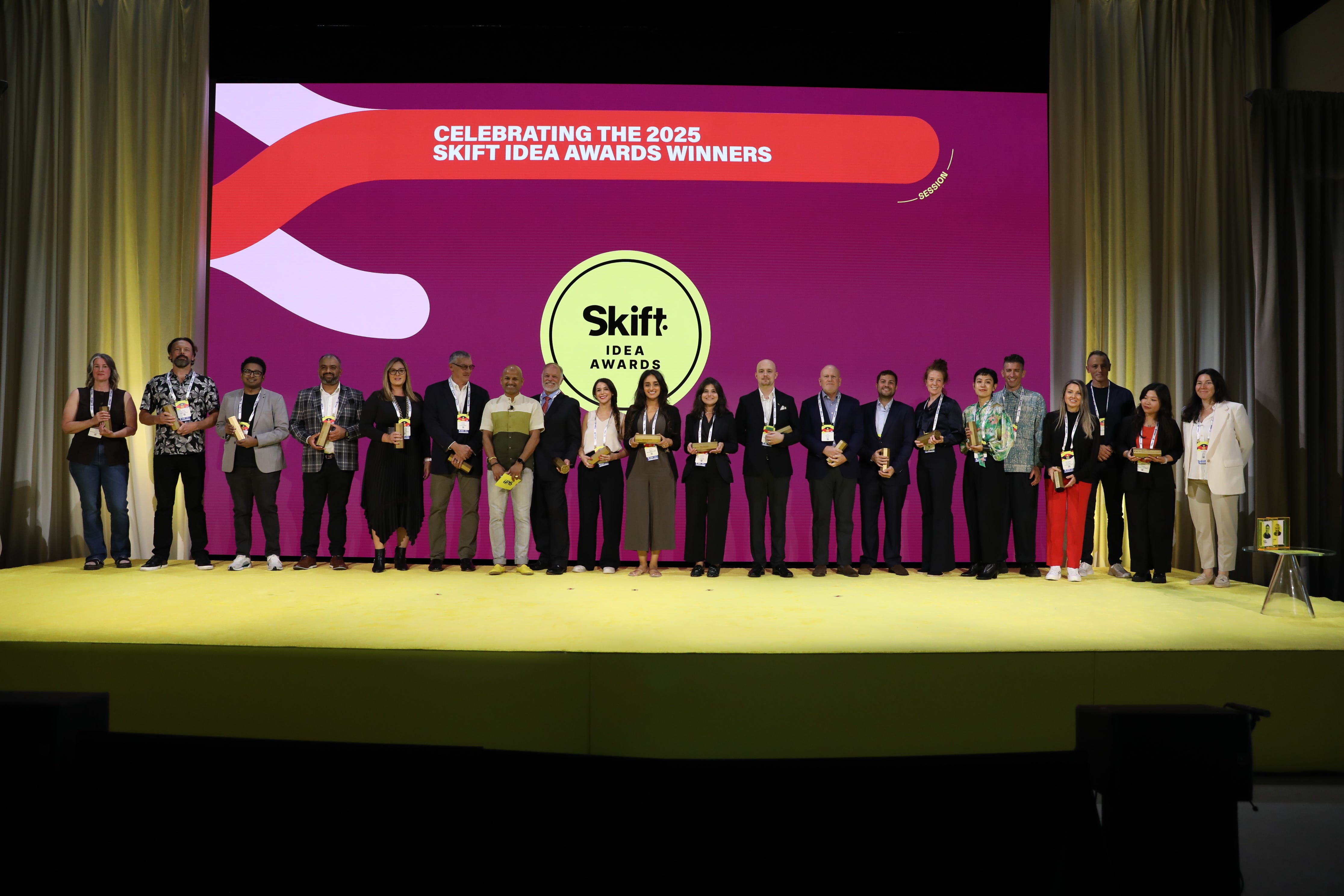
It’s always great to be in NYC - this time it was for a short 36 hours. Had a lunch meeting in Madison Square Park, then attended Skift Global Forum where Extenteam won a Skift Idea Award for our new guest communications platform that leverages both Humans and AI.
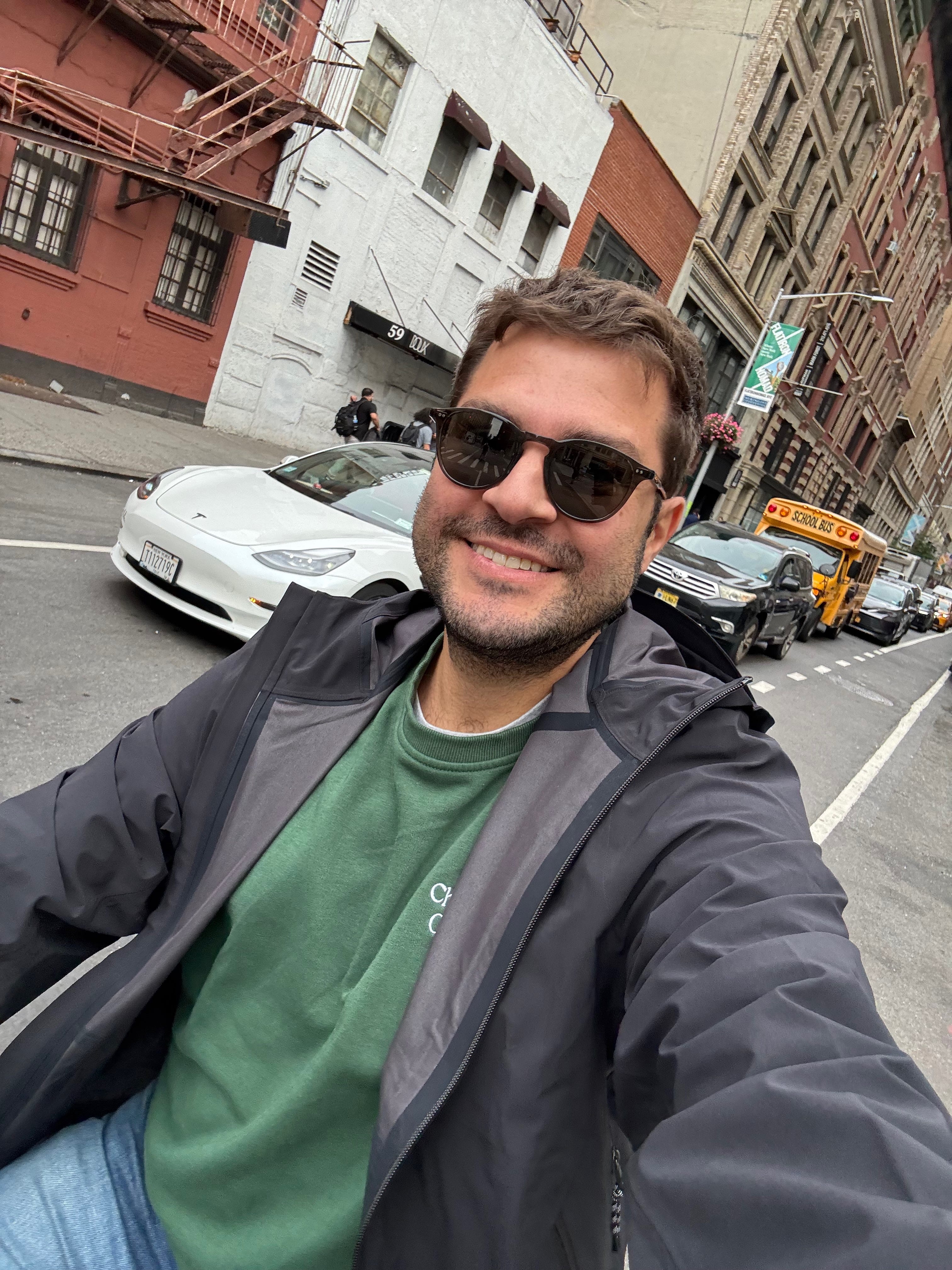
The highlight of the day was me being escorted to the wrong Green room, where I crashed booking.com CEO Glenn Fogel - and he almost got offended that I did not know who he was. I only recognized who he is after him being on stage right after us.
Leadership Styles of Glenn Fogel and Brian Chesky
And what stuck with me is his leadership style vs Brian Chesky’s - which was right after Glenn’s keynote. To me it felt like Glenn was almost in denial mode, diverting the difficult questions such as why they are lagging on booking volume in the US - whereas Brian made himself vulnerable. Brian sounded authentic ( I cannot judge whether that was real or fake, but it felt like he was being who he is). He admitted that Airbnb should be growing faster, but most importantly he recognized that AI creates a lot of unknowns, even for Airbnb - but not only for Airbnb - and the entire ecosystem is going to ride the change.
The difference in the leadership styles of both leaders were totally opposite, and I feel like authenticity and being truthful to oneself is a great trait to build trust with your team.
Team Composition
As any business grows, the needs of the business changes.
"The only constant is change" as an ancient aphorism goes, famously attributed to the Greek philosopher Heraclitus.
The increased revenue brings a new set of challenges. And some leaders are in denial (or simply never been there) about the changing landscape of their business.
Perhaps the team members that were hired to do the job are no longer the right fit, especially if they are stuck in the past, and not adapting to the current day and age, but sticking their heads into the sand- and doing what they used to do 2-3-4 years ago.
Last week at the hotel gym, I had a conversation with a fellow founder and CEO of a successful proptech company.
As a founder, you start asking yourself - do people who helped me get here can also be the ones to get me to the next stage. Deep inside, as a founder, you would know who can - and who probably won’t - but often times founders drag the inevitable. Either because of loyalty. Or because they are afraid to have the difficult conversation. Or they have 99 other things on their plate and changing a leader will add another cumbersome task to their plate.
The hidden cost of this is much higher than one anticipates it in my opinion. It’s not just the salary, but the drag in the business. The plateau of progress. The motivation stagnates.
I believe everyone at a company is replacable, including the founder/ceo - including myself.
I think a lot of people wait for an external triggering event to take action on a lot of things. But I believe it’s best to do a course correction / or substitute “players” - not when you are in panic mode, but when things are stable.
Every person on the team is helping your company grow, or slowing you down. And I believe it’s in every founders fiduciary duty to themselves ( and investors if they have any) to figure out who has an elastic mindset, who is flexible, who is willing to adapt and grow with the company.
If
the skill gap is huge
they are avoiding the hard parts of the job - and focusing on the fluff - or things they are comfortable doing, as opposed to rolling up their sleeves and trying to sort out things
they constantly seek validation or need guidance
they are coming up with excuses instead of solutions
cannot move the KPIs to the right direction
I think it’s time to do both parties a favor - and part ways.
At the end, we only live once and life is meant to be fun and enjoyable.
I’m off to my flight now, greetings from JFK.